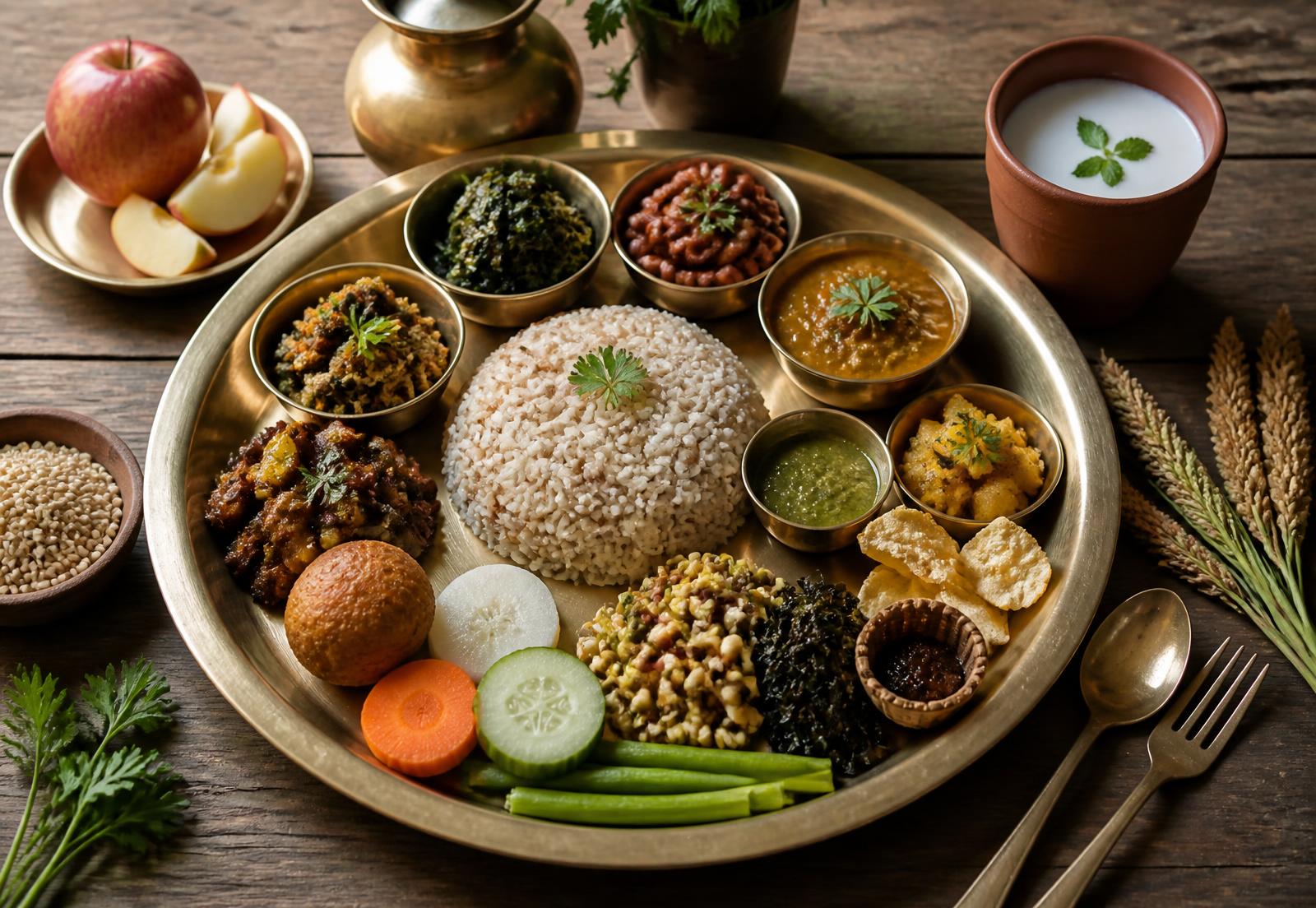
A gentle kitchen detox is not a starvation plan, a juice-only cleanse, or a quick cure. It is a practical way to make everyday meals simpler: choose minimally processed foods, drink enough water, include vegetables and fibre, and follow regular meal times. Small habits are safer and more sustainable than restrictive rules.
What a Gentle Kitchen Detox Can Mean
Your liver, kidneys, lungs and digestive system already help your body process and remove waste. Food cannot flush toxins overnight. Food can support normal health by providing fibre, protein, vitamins, minerals and enough fluid. Think of this guide as a reset for your kitchen routine, not a medical treatment.
Build Balanced Plates
A simple plate can include vegetables, a filling whole grain or starchy food, and a protein source. In a Nepali kitchen, that may mean dal-bhat with seasonal tarkari, beans, curd, eggs, fish, chicken, tofu, or chana. Add fruit, nuts and seeds as practical snacks.
- Choose seasonal vegetables and fruit often.
- Include fibre-rich dal, beans, oats, barley, millet and whole grains.
- Use protein at meals to help you stay satisfied.
- Limit sugary drinks and heavily processed snacks.
Hydration and Regular Meals
Water is usually the best daily drink. Eat regular meals according to your hunger, work schedule and health needs. Skipping meals to detox can make some people tired or overly hungry later.
Safety Note
If you are pregnant, breastfeeding, under 18, managing diabetes, kidney disease, digestive disease, or taking regular medicines, speak with a qualified health professional before changing your diet significantly. This article is general education and does not replace individual medical advice.